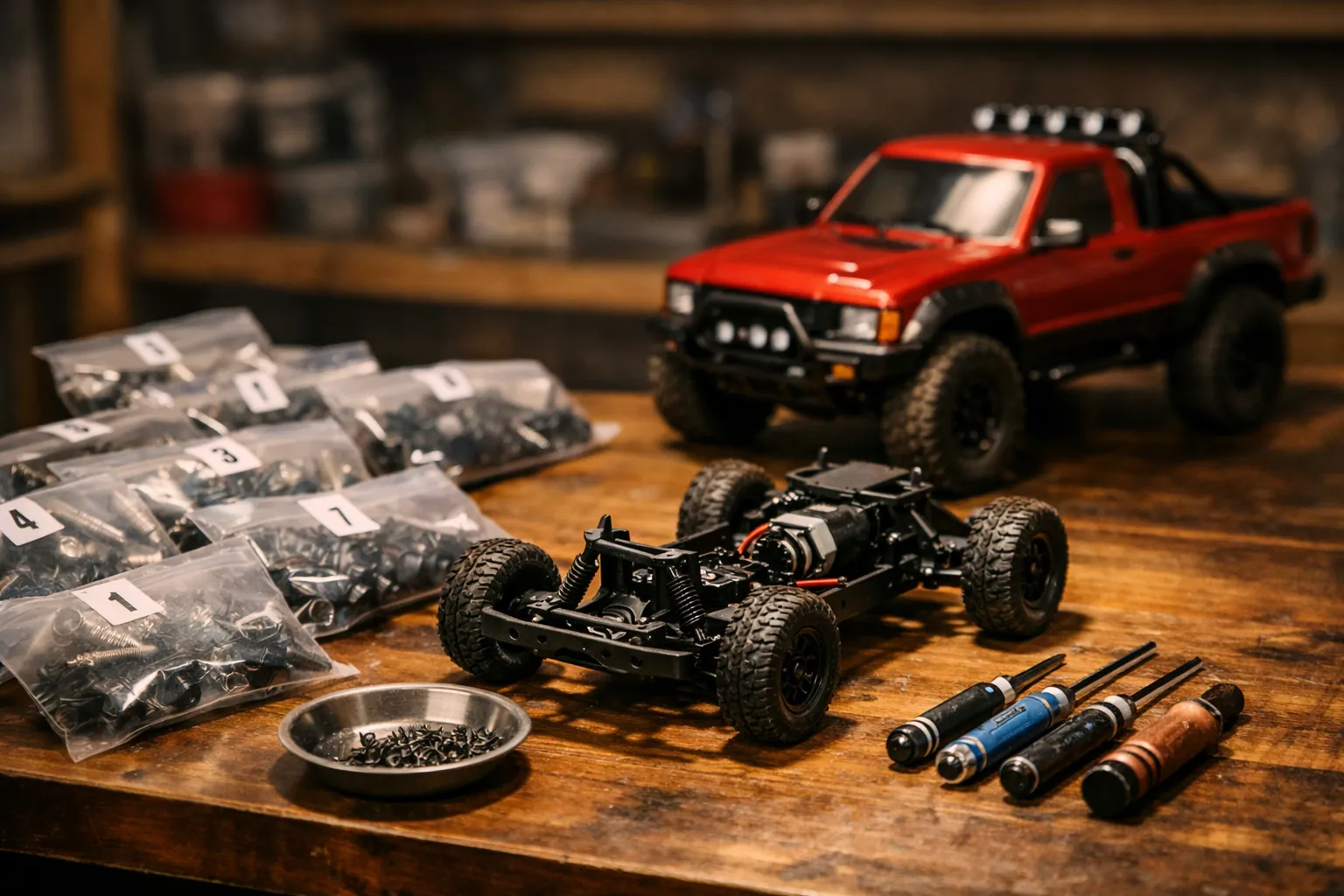
Buy an RTR (ready-to-run) truck first unless you specifically want to build. It arrives assembled with the electronics and transmitter in place, so you drive today and pick up the mechanics as you repair it. Choose a kit if you enjoy building, want to pick your own motor and radio, or plan to race. Just know the kit's shopping list usually brings the total up to the RTR's price, or past it.
How we put this together
We compared how manufacturers package RTR and kit versions on Amazon, including Traxxas's unassembled Slash 2WD kit next to its ready-to-run trucks, and looked up the best-selling electronics a kit needs. Everything was checked October 3, 2026. How we research.
RTR, ARTR, roller, kit: the spectrum
RTR vs kit at a glance
| RTR | Kit | |
|---|---|---|
| Time to first drive | Charge the battery and go | Build, wire, paint, then charge |
| Electronics | Chosen by the maker, installed | You choose and install |
| Body | Painted | Usually clear; you paint it |
| Total cost | Known up front | Kit price plus electronics, battery, charger, paint |
| What you learn | As you repair it | Every part, before you drive |
| Best for | First-timers, gifts, bashers | Builders, racers, tinkerers |
Why RTR is the right first choice for most people
The biggest reason is simple: you find out whether you like driving before you spend a weekend building. Not ready to spend on a hobby-grade truck yet? Here is what cheap buys.
The electronics are also matched for you. The maker sets up the motor and ESC with the right gearing and servo, often with beginner aids like Traxxas's Training Mode or Arrma's throttle limiting. And you still learn to wrench. The first broken arm or stripped gear teaches you more than any manual.
Three battery-included RTRs we'd start with:
- the Arrma Mojave GROM, with a 2S LiPo and Smart charger;
- the Traxxas Bandit XL-5, with NiMH and a USB-C charger (see our Bandit XL-5 review);
- the Traxxas Mini Maxx, with a 2S LiPo and USB-C charger.
The full list is in the best RC car for beginners. Nitro trucks come ready to run too; see our gas-powered RC car picks.
When a kit is the better choice
If you already love building models, LEGO Technic or bikes, the build is half the fun, and a kit gives you that. A kit is also how you get exactly the electronics you want, whether that's a sensored brushless system for racing, a particular radio or a high-torque servo. If you plan to race, build your own car. It teaches the setup knowledge racing demands. For kids, a remote control LEGO car is the gentlest kind of kit.
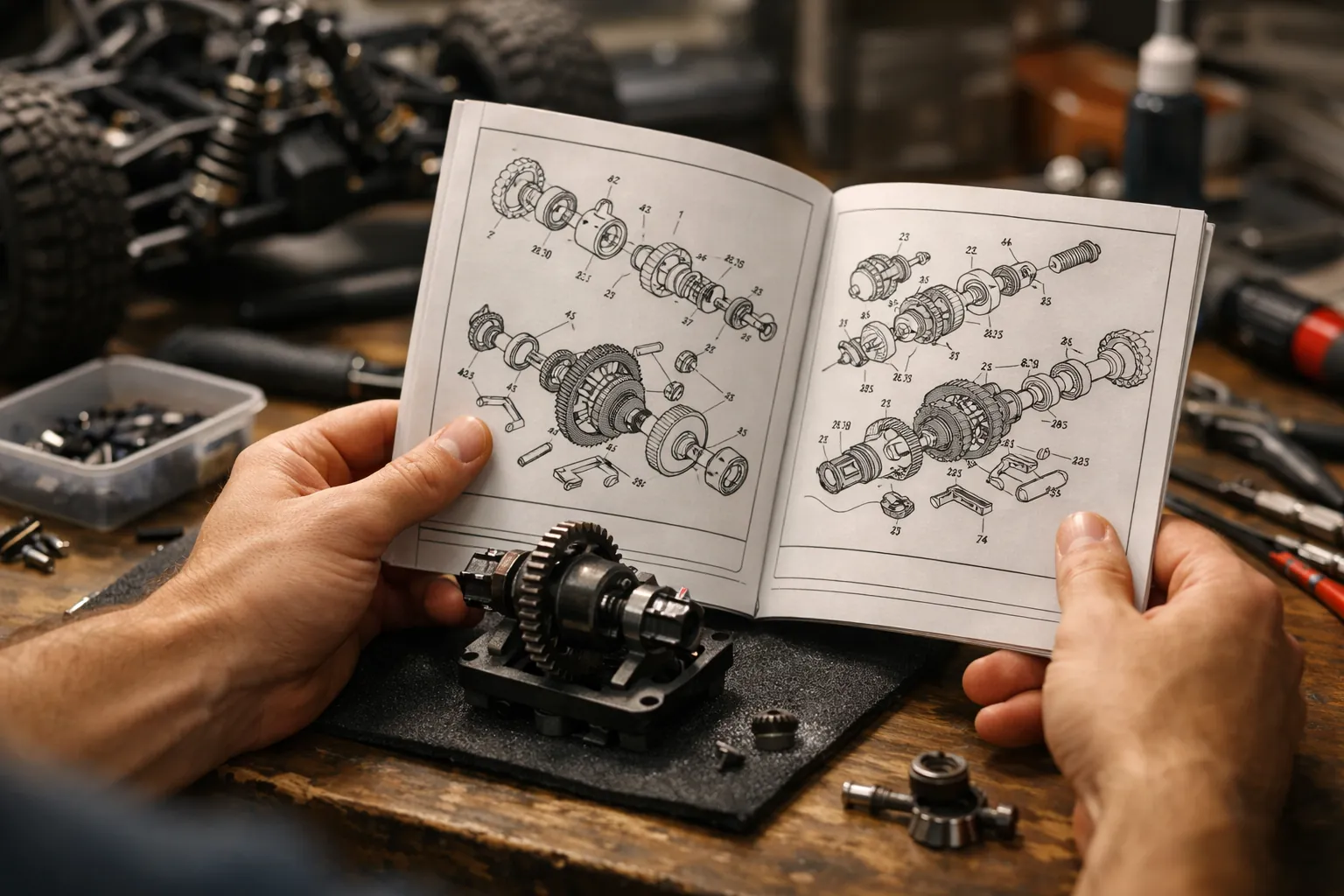
Traxxas sells its best-selling short course truck as a build-it-yourself Traxxas Slash 2WD unassembled kit (200+ bought last month). Read its "required to complete" list carefully, because kits typically leave out some or all of the electronics, along with the battery and charger. For more options, see the best RC car kits to build. Crawler fans can compare the Builder's Kit with the ready-to-run versions in the Axial SCX10 III review, or look at the ready-to-run Traxxas TRX-4. Jeep bodies by size are in the Jeep crawler guide.
The kit shopping list
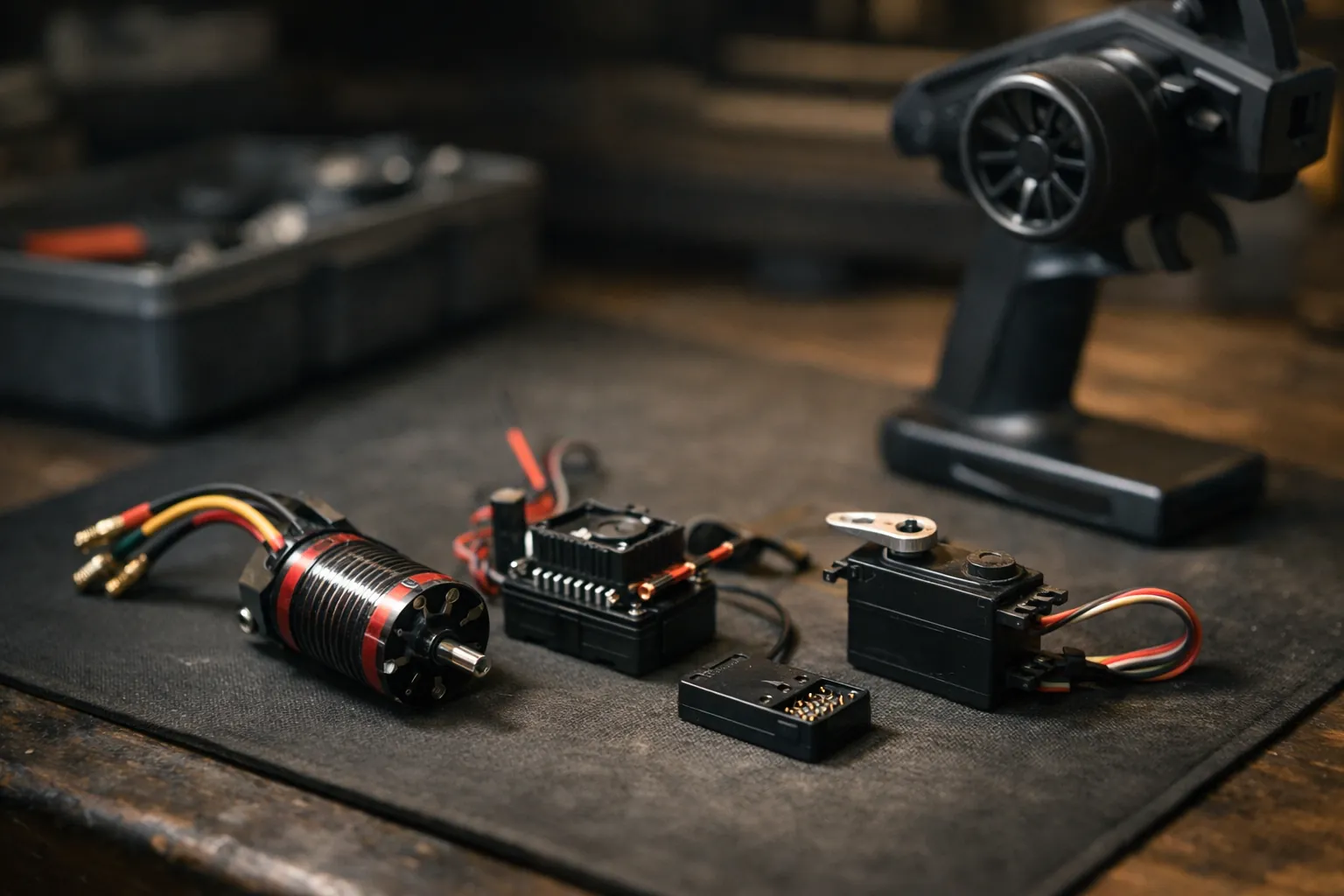
Unless the listing says otherwise, plan on buying:
| Item | Example | Note |
|---|---|---|
| Motor + ESC | Hobbywing 10BL60 G2 + 3652SL G2 combo | Match to battery voltage and vehicle size |
| Steering servo | ZOSKAY 25 kg metal-gear servo | Check size and spline |
| Radio (transmitter + receiver) | Any 2.4 GHz surface radio | Pistol-grip surface radios suit cars |
| Battery | Zeee 2S 5200 mAh (XT60) | Fit the tray; match connector to ESC |
| Charger | SkyRC B6neo balance charger | LiPo needs a balance charger |
| Body paint | Polycarbonate (Lexan) spray paint | Paint the inside of clear bodies |
| Tools | TRX3415 tool set with pouch | Plus thread lock and shock oil if not included |
Add it up before you choose. For many trucks, the kit plus electronics plus power costs as much as the RTR or more. That's fine if the build and the parts choice are what you're after. Go in knowing it. For the radio line, our RC transmitter guide lists surface radios worth owning.
Painting a clear body
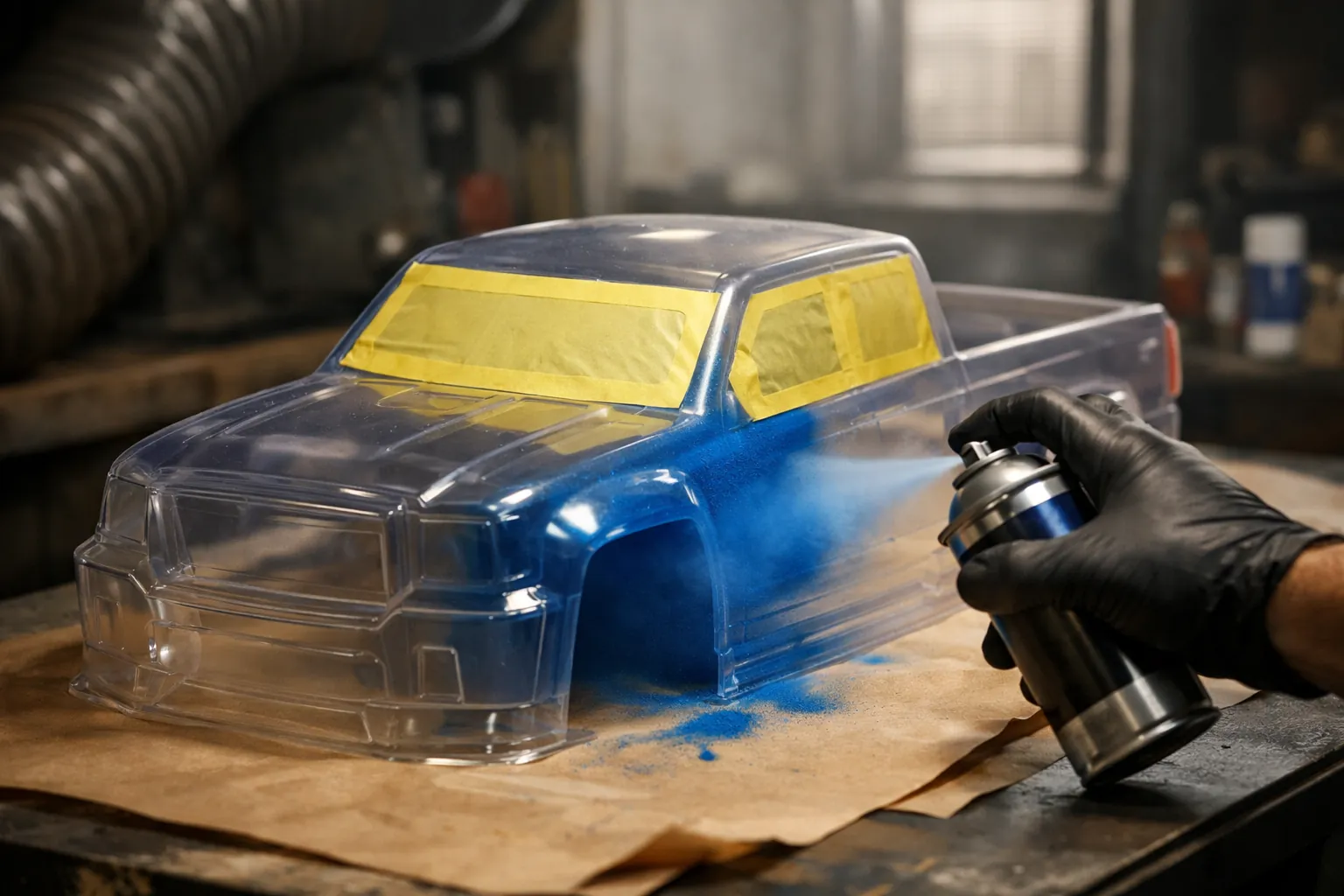
Kit bodies usually come as clear polycarbonate. Mask the windows and paint the inside with polycarbonate-specific paint; regular spray paint cracks and flakes off a flexible body. Then peel the outer protective film. Work somewhere ventilated, and give it full drying time before you mount it. Painting the body is the part kit builders worry about most; our body painting guide walks through a first two-color scheme.
Build tips if you go the kit route
- Read each step fully before starting it, and lay out parts bags in order.
- Use a magnetic tray for screws, and blue thread lock on metal-to-metal screws only.
- Take your time on the shocks and differentials. They decide how the car drives.
- Center the servo before fitting the horn, and set steering end points on the radio.
- Set up the ESC for your battery type, LiPo low-voltage cutoff included, before the first run.
Safety doesn't change because you built the car: use a LiPo balance charger, charge in a fire-resistant container or LiPo bag on a non-flammable surface, and never leave it unattended (Traxxas Battery Basics).
Common first-kit mistakes
Mismatched electronics top the list. An ESC rated for 2S won't survive a 3S pack, and a motor too big for the mount won't fit. Before ordering, check voltage ratings and motor size, then the connector types.
The small stuff gets forgotten. Pinion gear, body paint, thread lock and shock oil are easy to overlook, and a missing pinion stops the whole build.
Screws into plastic get over-tightened. Snug is enough; a stripped hole weakens the part.
And radio setup gets skipped. Bind the receiver and check that throttle and steering go the right way. Set end points and calibrate the ESC before the first run, with the wheels off the ground.
Who regrets which
RTR buyers rarely regret it. Some later wish they'd picked a truck with better parts support, which matters more than RTR vs kit. Kit buyers who regret it usually wanted to drive more than build, or underestimated the extra purchases. Buying a gift? Buy RTR. Nobody wants to unwrap a box of parts bags with nothing to drive.
Our advice: RTR now, kit next winter
Get an RTR first, ideally one with the battery and charger in the box, and learn the mechanics as things break. Make the kit your second car, once you know which electronics you want. By then you'll own a battery and charger from the first truck, and the Slash 2WD kit becomes a good winter project instead of a pile of extra purchases.
Product details from Amazon listings, checked October 3, 2026. How we research · Affiliate disclosure