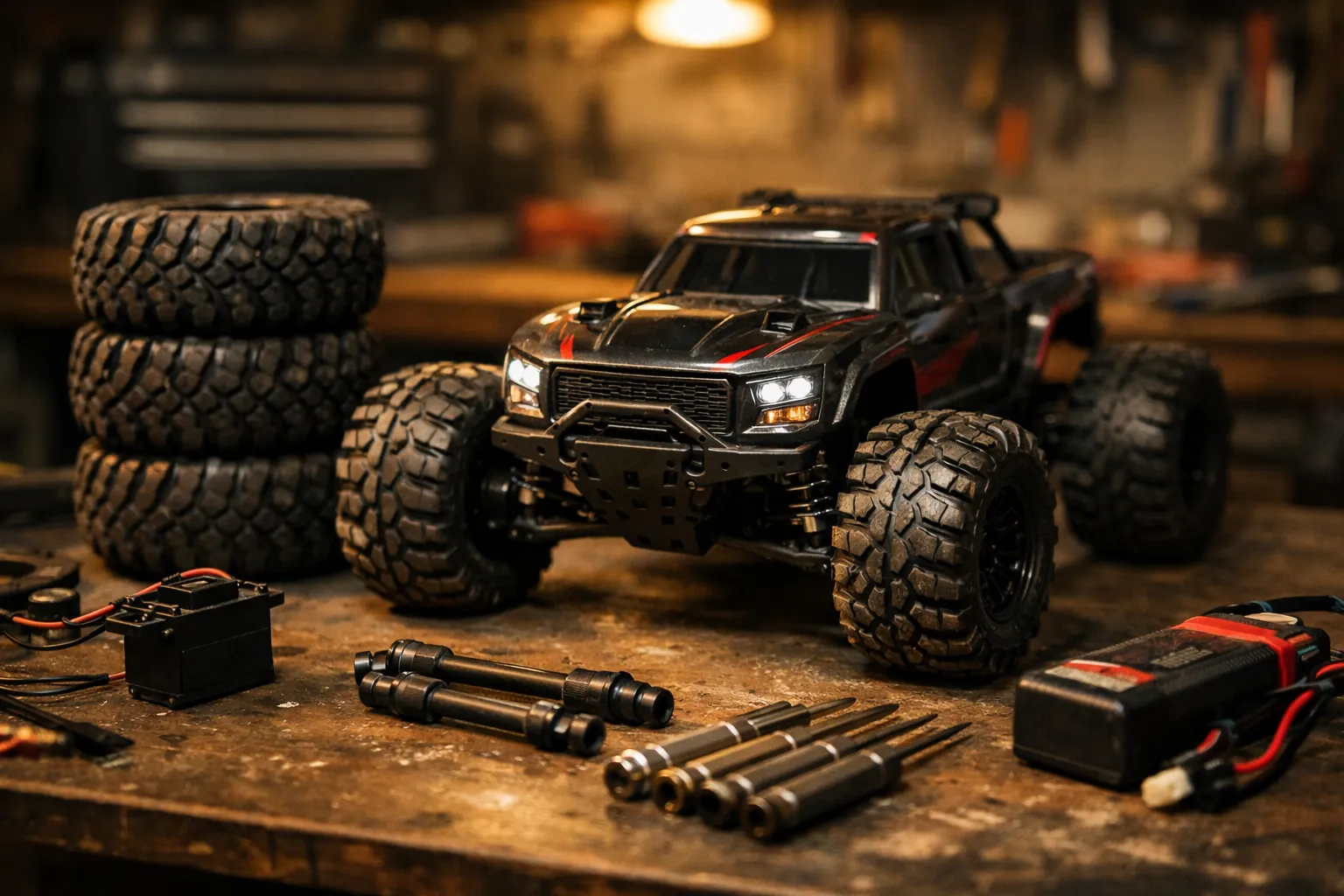
The five upgrades that pay off first on almost any basher are: (1) a second battery and a real balance charger, (2) tires for your surface, (3) a stronger steering servo, (4) steel driveline parts, and (5) tougher suspension arms. Do them roughly in that order, upgrade the part that actually broke rather than everything at once, and skip the shiny aluminum until you know you need it.
How we chose these upgrades
We looked at what basher owners actually buy, using Amazon's "bought in the past month" counts and ratings for RC upgrade parts on October 3, 2026, and at the failure points owners most often report on brand forums. The parts below are examples of each category with real sales and ratings; always check that a part lists your exact truck before buying. How we research.
This is a How we pick page. We didn't install these parts ourselves; fitment and specs come from each listing.
The upgrade order that saves money
| Upgrade | What it fixes | Rough priority |
|---|---|---|
| Second battery + balance charger | Short sessions, slow USB charging, safer charging | Day one |
| Tires | Poor grip, worn or ballooning tires, wrong tread for your surface | First few weeks |
| Steering servo | Weak or slow steering, stripped servo gears | When steering fades or fails |
| Driveline (driveshafts, gears) | Snapped shafts, stripped diff or transmission gears | After the first break, or before a power upgrade |
| Suspension arms | Repeatedly broken arms after crashes | After the second broken arm |
1. A second battery and a real charger
It's not glamorous, but nothing improves a day of bashing like twice the driving time. Many ready-to-run trucks ship with slow USB chargers; a proper balance charger charges faster, balances cells and has a storage mode for LiPo packs. Match the new battery to your truck's connector and battery tray. See the best RC car battery for each truck and the best LiPo charger for beginners.
Add a LiPo bag while you're at it. Manufacturers say to charge LiPo packs in a fire-resistant container on a non-flammable surface and never leave them unattended (Traxxas Battery Basics). The Zeee LiPo safe bag and Tenergy LiPo bags (2-pack) are two of the best-rated options on Amazon.
2. Tires for your surface
Tires are the cheapest way to change how a truck drives. Stock tires are a compromise; a set made for your surface (grass, dirt, pavement) adds grip and control. On fast trucks, belted tires resist "ballooning" at speed.
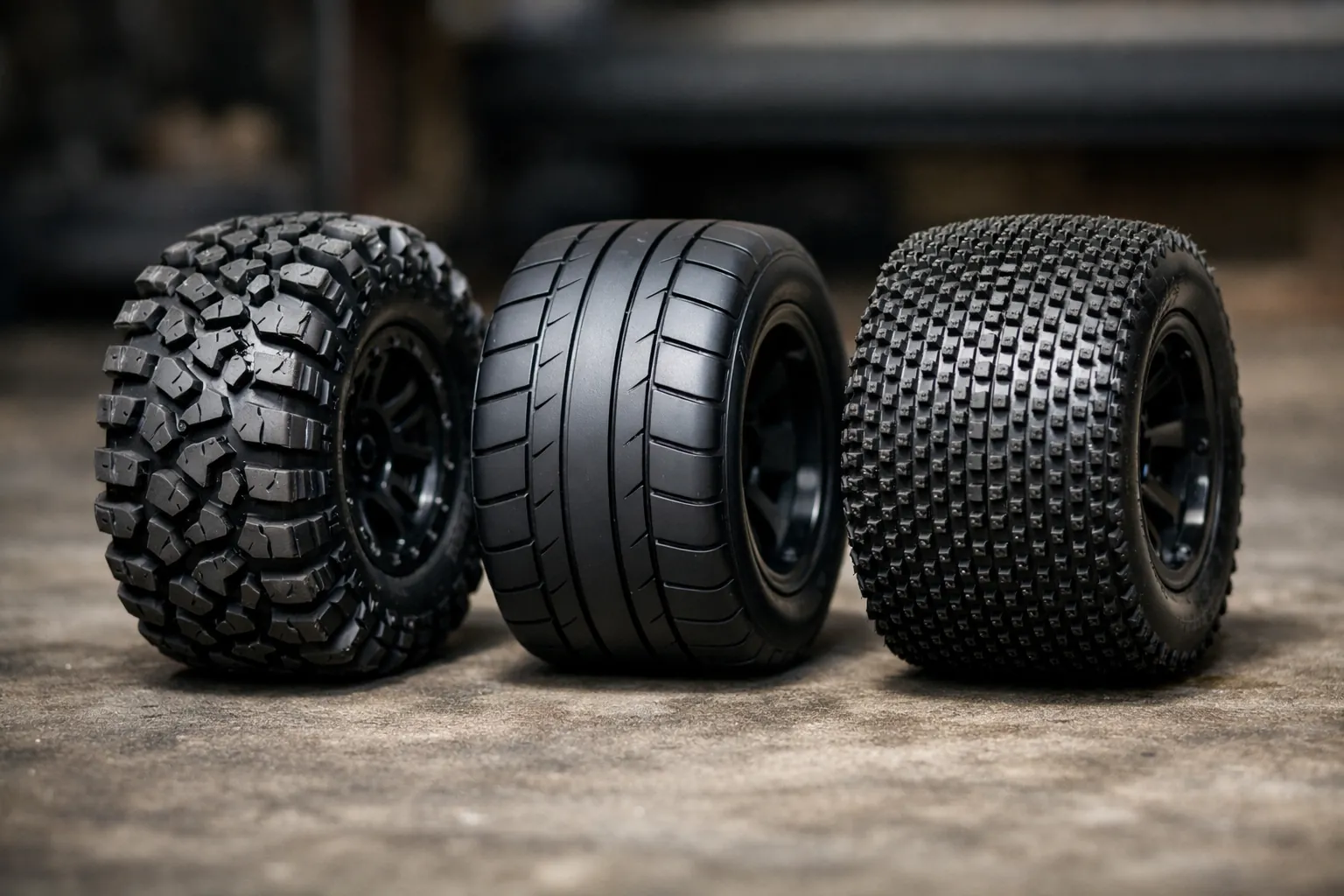
- Arrma dBoots Fortress SC 2.2/3.0 pre-mounted (14 mm hex): short course size.
- Arrma dBoots Hoons 2.9 belted, pre-mounted: belted for high-speed bashing (955 ratings).
- RC Station 2.8" wheels and tires (12 mm hex): listed for the Traxxas Rustler and Stampede.
- Pre-glued short course tires (12 mm hex): listed for the Slash 4x4 and 2WD.
Check hex size (12 mm, 14 mm, 17 mm) and wheel offset for your truck. Crawling instead? See the best RC crawler tires.
3. A stronger steering servo
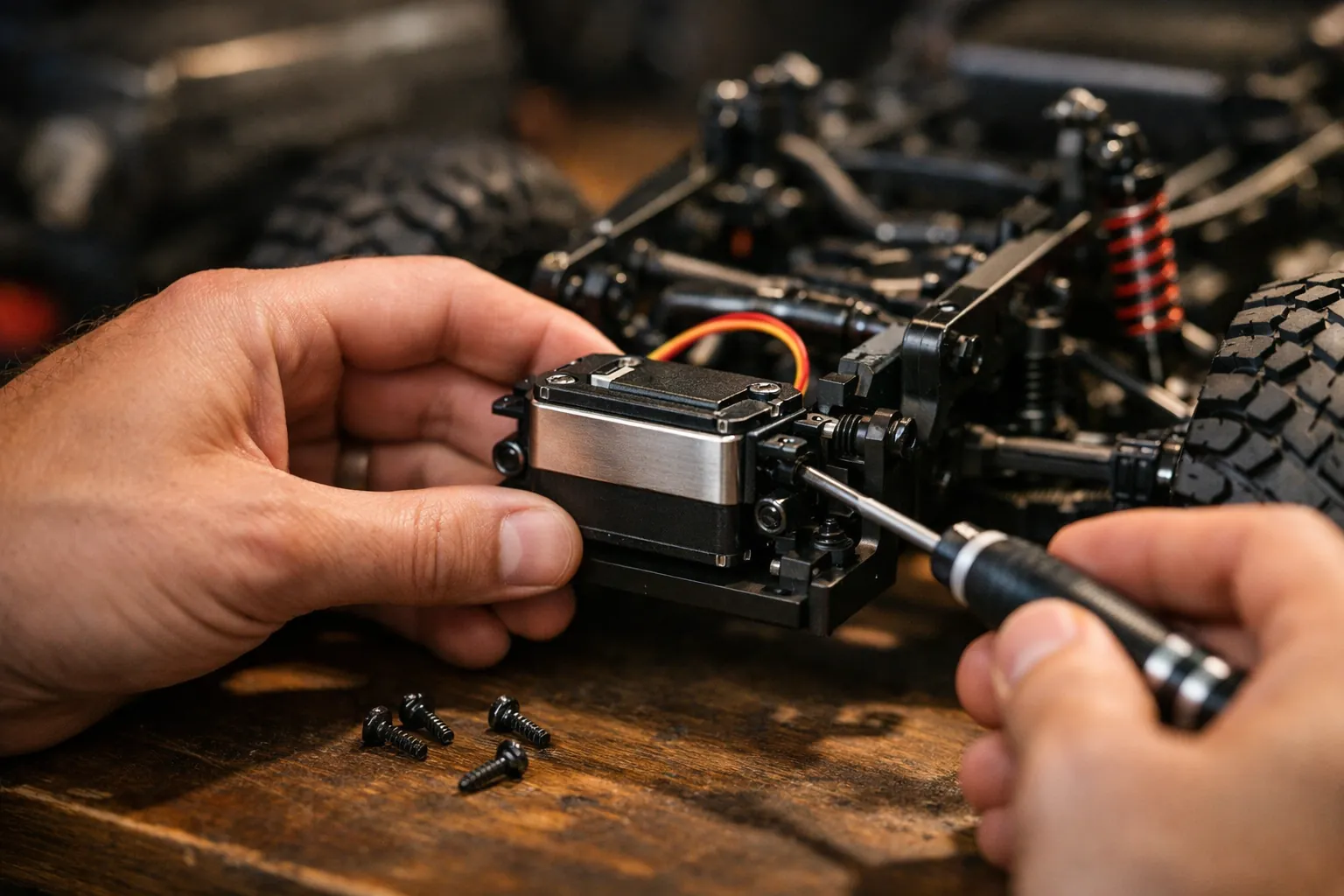
Stock servos on many ready-to-run trucks are adequate at best. A higher-torque, metal-gear, waterproof servo steers more precisely, holds its line in rough terrain, and survives crashes that strip plastic gears. Check the servo size (standard vs mini), spline count and voltage rating against your truck.
- ZOSKAY 25 kg metal-gear digital servo: a budget favorite with 1,300+ ratings.
- Miuzei 25 kg metal-gear servo
- 56 kg waterproof brushless HV servo: for heavy 1/8 trucks.
- Traxxas 2085L high-torque waterproof servo: for X-Maxx and XRT owners.
4. Steel driveline parts
Driveshafts, differential gears and transmission gears take every landing and every full-throttle launch. Plastic driveshafts and gears are common failure points, especially after a battery or motor upgrade. Replace them with steel as they break, or before you add power.
- Steel front and rear driveshaft set for Arrma 1/8 6S (Kraton, Outcast, Notorious)
- Arrma front and rear metal diff Boost Box (ARA210007): check the listing for which models it fits.
- Arrma Boost 4x4 transmission upgrade set (ARA210003)
- Hardened steel driveshafts for TRX-4M: among the most-bought TRX-4M upgrades this month (300+).
5. Tougher suspension arms
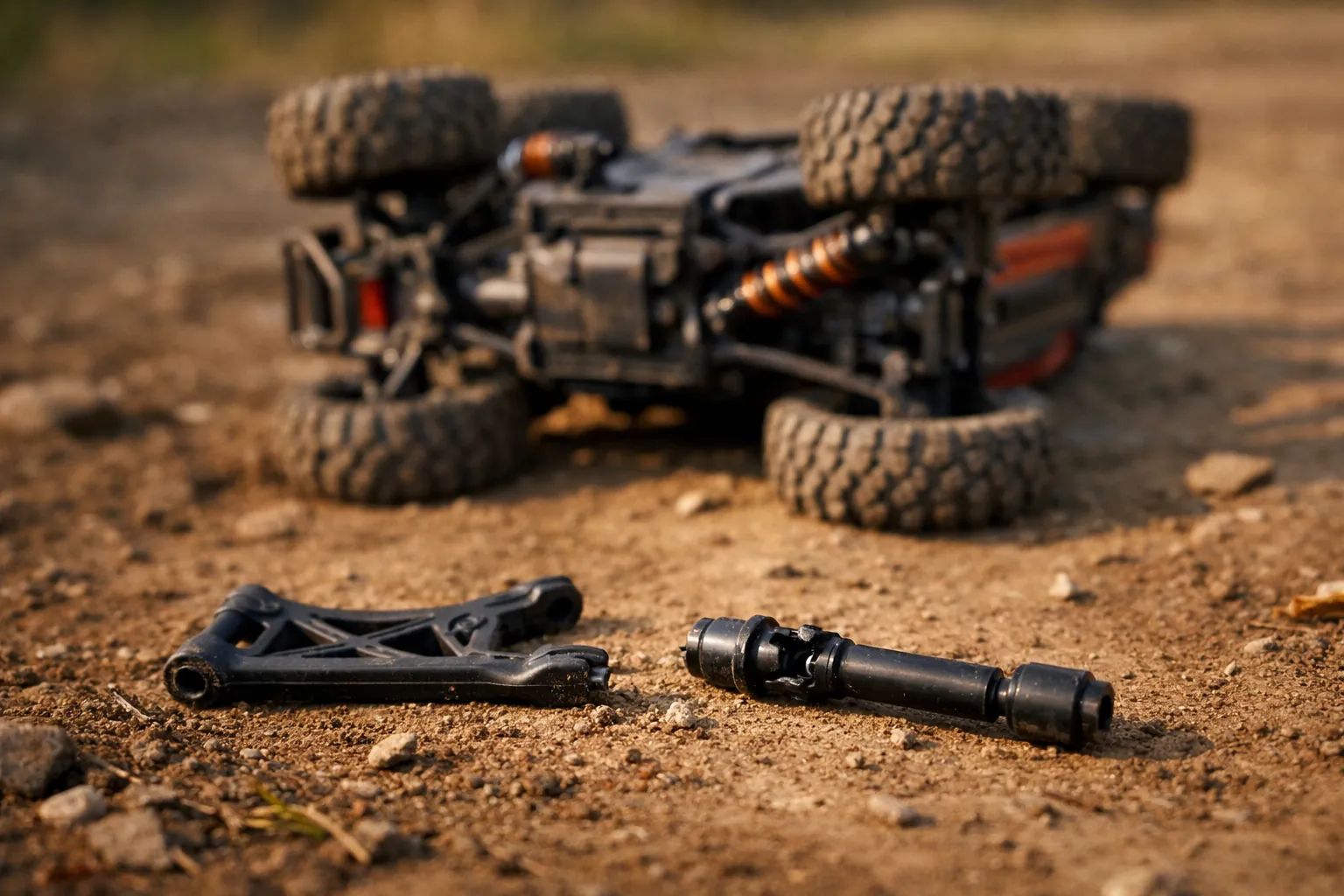
Suspension arms are designed to break before more expensive parts do. If you keep snapping the same arm, a tougher aftermarket arm helps; many bashers prefer flexible, impact-resistant plastic over aluminum, which can bend and pass the shock along to the chassis. For Arrma 6S owners, this RPM front and rear A-arm set is listed for later Kraton, Talion and Outcast versions; check the version notes.
While the arms are off, check the bearings. A sealed bearing kit such as this sealed bearing kit for the Kraton 6S BLX is cheap insurance on trucks that run through dust and water.
Before any upgrade: the right tools
Cheap L-wrenches strip screws and turn a ten-minute job into an evening. Good hex drivers in your truck's sizes, a wheel nut driver, blue thread lock for metal-to-metal screws, and a repair stand make every upgrade easier. A combo like this RC repair stand with screwdriver set and screw kit (200+ bought last month) covers the basics.
What to skip (for now)
- Anodized aluminum everything. It looks great, adds weight and cost, and can make crashes more expensive.
- A bigger motor before a stronger driveline. More power finds the weakest gear first.
- More battery voltage than your ESC is rated for. Check the ESC's rating before moving from 2S to 3S or higher.
When you do want more power, read brushless vs brushed and RC motor KV explained first.
The bottom line
Spend on driving time first (battery, charger, LiPo bag), then on grip (tires), then on control (servo), and upgrade driveline and arms as they break. That order keeps you driving more and repairing less, and it puts your money where most bashers actually fail.
Part details from Amazon listings, checked October 3, 2026. Check fitment for your exact model before buying. How we research · Affiliate disclosure