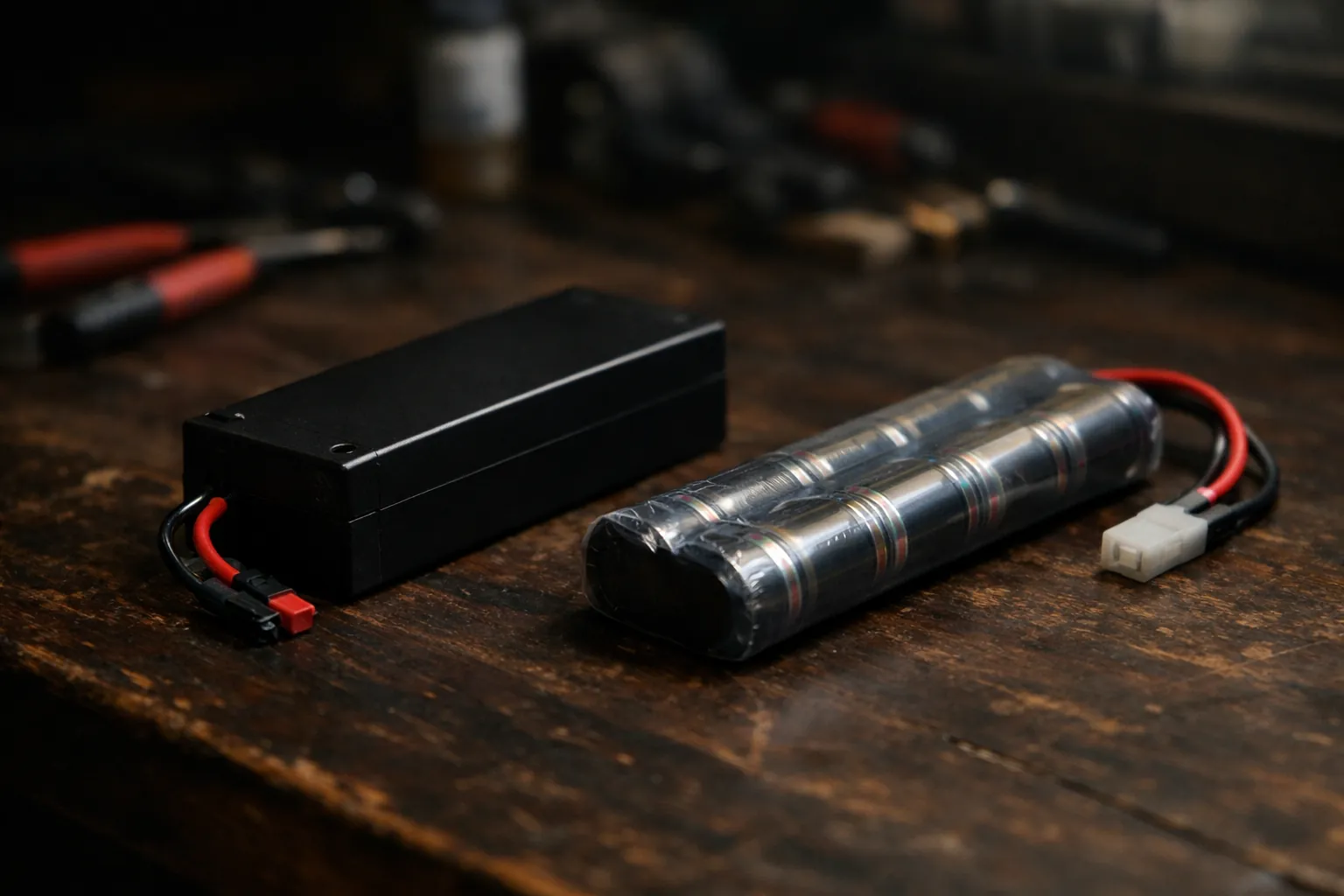
LiPo batteries give more power and less weight; NiMH batteries are simpler and harder to damage. If your car is brushless and you'll use a proper balance charger and follow the safety rules, run LiPo. If the car is for a child, a first-time owner, or a brushed car you just want to drive, NiMH is the easier choice. Many ready-to-run trucks, like the Traxxas Bandit, still ship with NiMH for exactly that reason.
How we put this together
This is an explainer, not a lab test. The safety rules below come straight from manufacturer documents: Traxxas Battery Basics, Spektrum's lithium battery safety sheet and Horizon Hobby's LiPo safety guidelines, all checked October 3, 2026. Battery examples are real Amazon listings with strong sales and ratings that day. How we research.
Why a "7.2V" NiMH and a "7.4V" LiPo aren't the same
Both chemistries stack cells in series. NiMH cells are 1.2V nominal, so a six-cell stick is 7.2V and a seven-cell is 8.4V. LiPo cells are 3.7V nominal, so a 2S pack is 7.4V and a 3S is 11.1V. The nominal numbers look close at 2S, but a fully charged LiPo cell sits at 4.2V (Traxxas: never charge a 2S above 8.4V or a 3S above 12.6V), and a LiPo holds its voltage much flatter through the run. That's why the same car feels faster on LiPo.
LiPo vs NiMH at a glance
| NiMH | LiPo | |
|---|---|---|
| Power through the run | Fades gradually as it drains | Stays strong, then drops near empty |
| Weight for the same energy | Heavier | Lighter |
| Running it flat | Tolerated (Traxxas) | Damages the pack; needs low-voltage cutoff |
| Charger | NiMH charger or multi-chemistry charger in NiMH mode | Lithium charger with cell balancing only |
| Storage | No storage charge needed | Store at about half charge (storage mode) |
| Fire risk if abused | Lower | Higher: follow the rules below |
| Best for | Kids, brushed cars, simple ownership | Brushless cars, speed, longer runs |
The LiPo rules manufacturers actually publish
These come from the Traxxas, Spektrum and Horizon documents linked above. They aren't optional extras; they're the conditions for using LiPo safely.
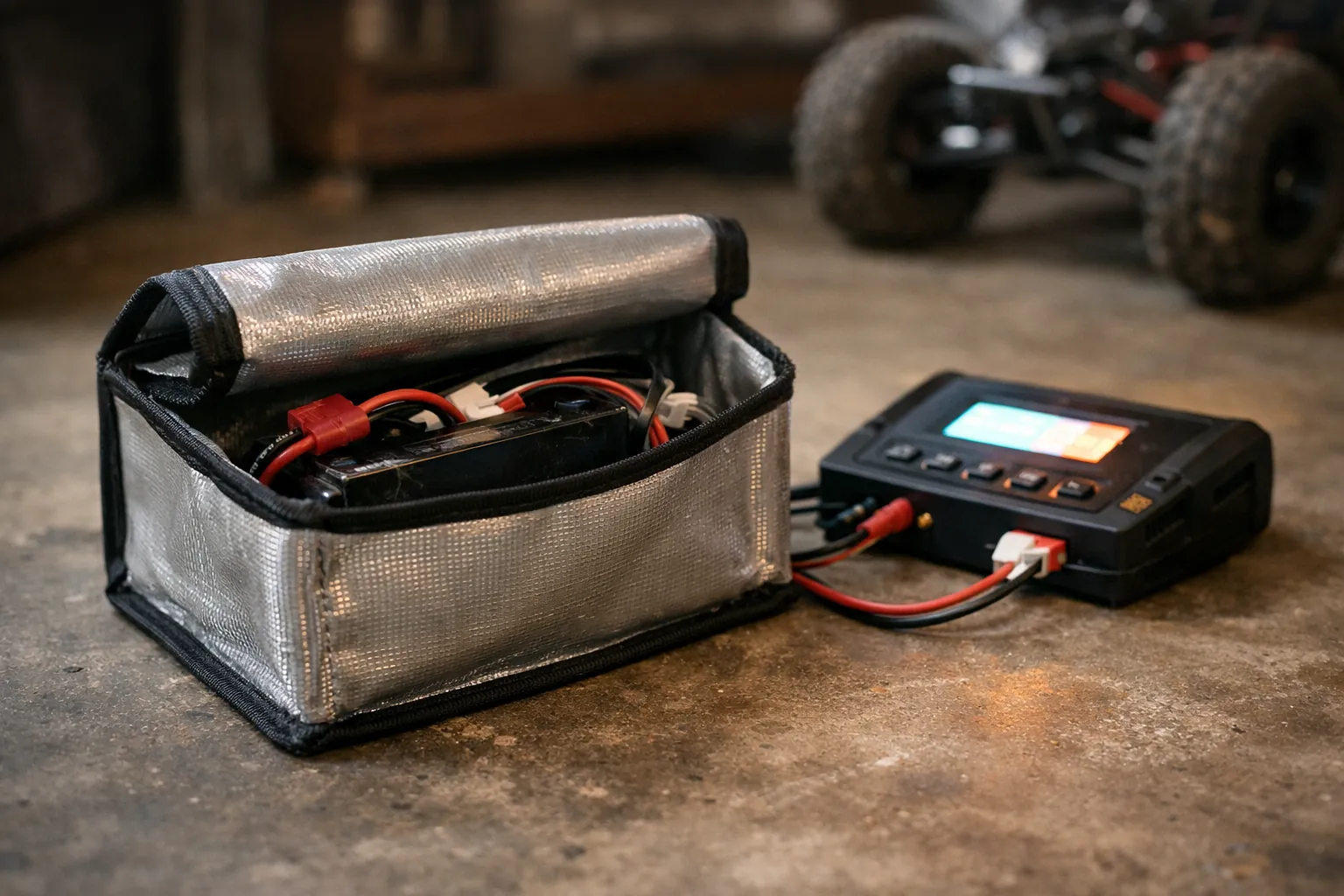
When charging
- Never leave a charging battery unattended, and never charge overnight (Traxxas, Spektrum).
- Charge in a fireproof or fire-retardant container, such as a LiPo bag, in an open area away from flammable materials (Spektrum). Traxxas adds: on a non-flammable surface like concrete, never on wood, cloth or carpet.
- Never charge the battery inside the model.
- Use a lithium charger with cell balancing, set to the right chemistry and cell count. Never use a NiMH charger on a LiPo (Traxxas).
- Charge at 1C or less unless the battery maker specifies otherwise (Spektrum). For a 5000 mAh pack, 1C is 5 amps.
- Don't charge a pack that's hot to the touch, or one that's below 40°F (Spektrum).
When driving
- Turn on low-voltage cutoff. Traxxas says to always turn Low-Voltage Detection on when using LiPo.
- After a crash, unplug and remove the battery, then inspect it (Spektrum).
When storing
- Store at about half charge. Horizon's sheet says 3.8V per cell; Traxxas says use the charger's storage mode.
- Store between 40 and 120°F, out of direct sun, and never in a car (Spektrum).
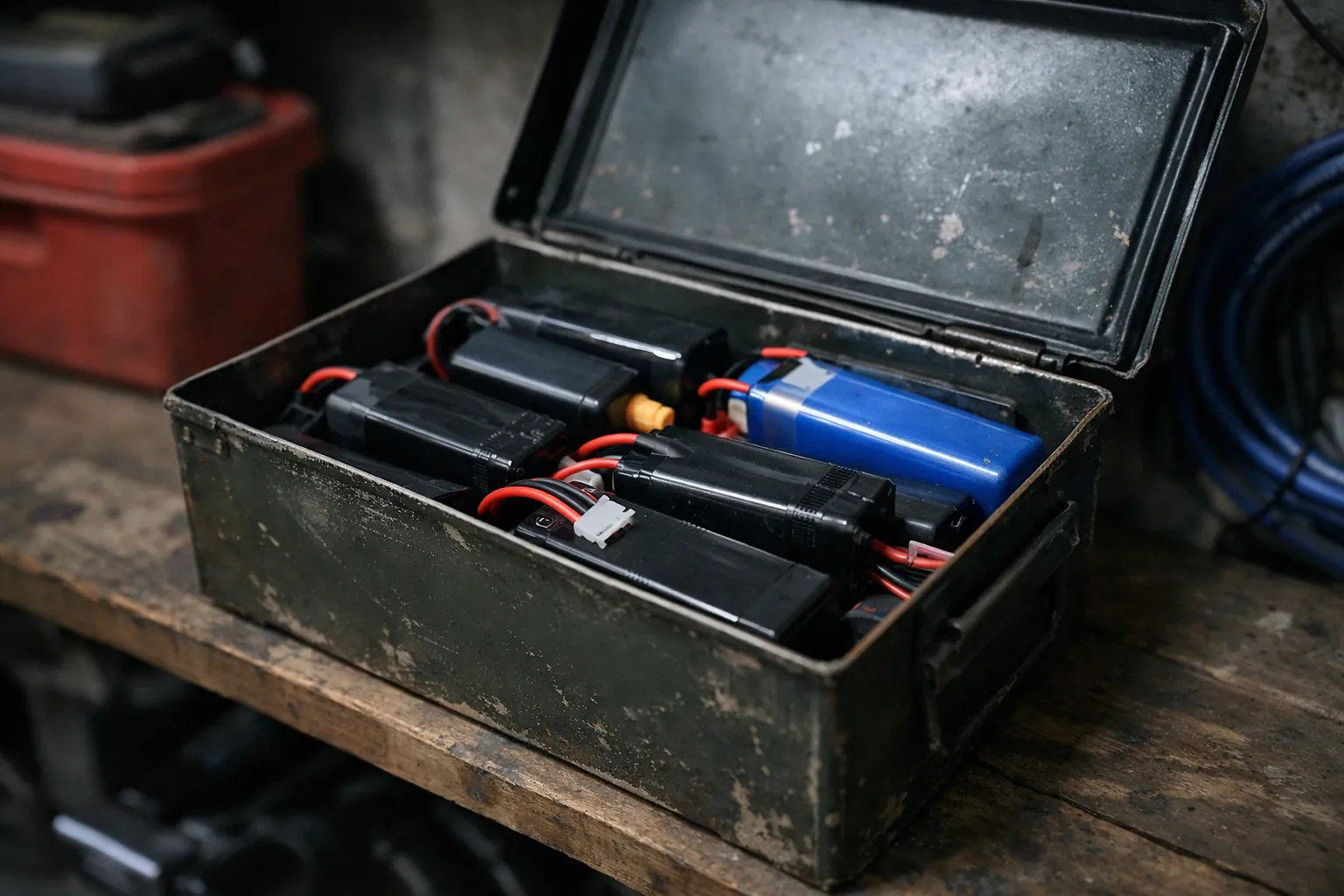
- Store unplugged, in a non-conductive, fireproof container, and don't let loose packs' terminals touch.
When a pack is damaged
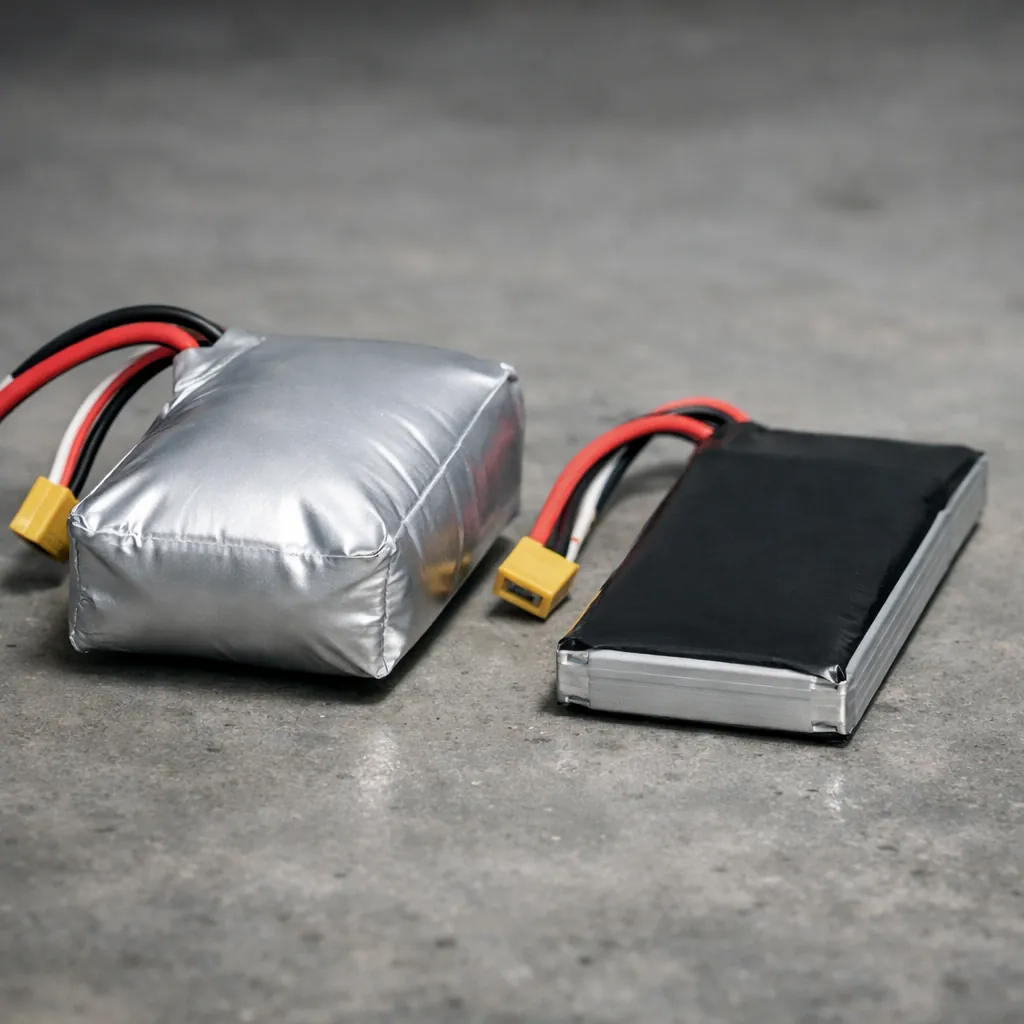
If a battery becomes damaged, hot, or starts to swell, Spektrum says to stop charging or discharging immediately, stop handling it, and dispose of it according to local laws. Horizon also says never to charge a wet battery and to safely dispose of packs that have been submerged.
Which one should you buy?
| Your situation | Run | Example |
|---|---|---|
| Kid's car or first brushed truck | NiMH | Tenergy 7.2V 3000 mAh NiMH |
| Budget spare for a Tamiya-plug car | NiMH | Zeee 7.2V 3600 mAh NiMH (2-pack) |
| 2S brushless, XT60 or Deans | LiPo | Zeee 2S 5200 mAh XT60 (2-pack) |
| 2S Arrma/Spektrum EC5-type | LiPo | Zeee 2S 5200 mAh EC5 (2-pack) |
| 2S Traxxas-plug truck | LiPo | HOOVO 2S 6200 mAh, Traxxas plug (2-pack) |
Check your truck's battery tray size and connector before you buy any pack. Our best RC car battery guide matches packs to specific trucks, and the connector guide explains which plug you have.
Chargers: the part people skimp on
A LiPo needs a balance charger. A multi-chemistry charger like the SkyRC B6neo charges both NiMH and LiPo (in the correct mode for each) and has the storage function LiPo packs need. If you only run NiMH, a dedicated NiMH charger such as the Tenergy smart charger for 7.2–12V packs is simpler. Traxxas owners can use the Traxxas EZ-Peak Plus, which reads Traxxas iD packs and sets itself up. More options in the best LiPo charger for beginners.
The bottom line
NiMH is the low-stress choice for kids and brushed cars: drive it flat, toss it on the shelf, charge it next weekend. LiPo is the performance choice for brushless trucks, and it's safe when you follow the manufacturer rules every time: balance charger, never unattended, fire-resistant container, low-voltage cutoff on, storage charge between sessions. If you won't do those things, stay with NiMH.
Safety guidance is quoted or paraphrased from Traxxas, Spektrum and Horizon Hobby documents, checked October 3, 2026. Always follow the instructions for your specific battery and charger. How we research · Affiliate disclosure